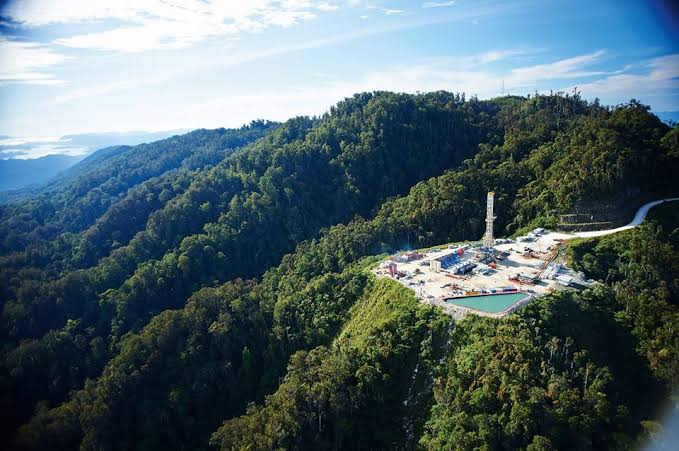
Developing Strategic Natural Gas Resources

for AsiaS Growing Energy Demand

Robinson Energy is focused on developing natural gas resources in Papua New Guinea, strategically positioned to supply growing energy demand throughout Asia.

THE LATEST

NEWS & PRESS RELEASES
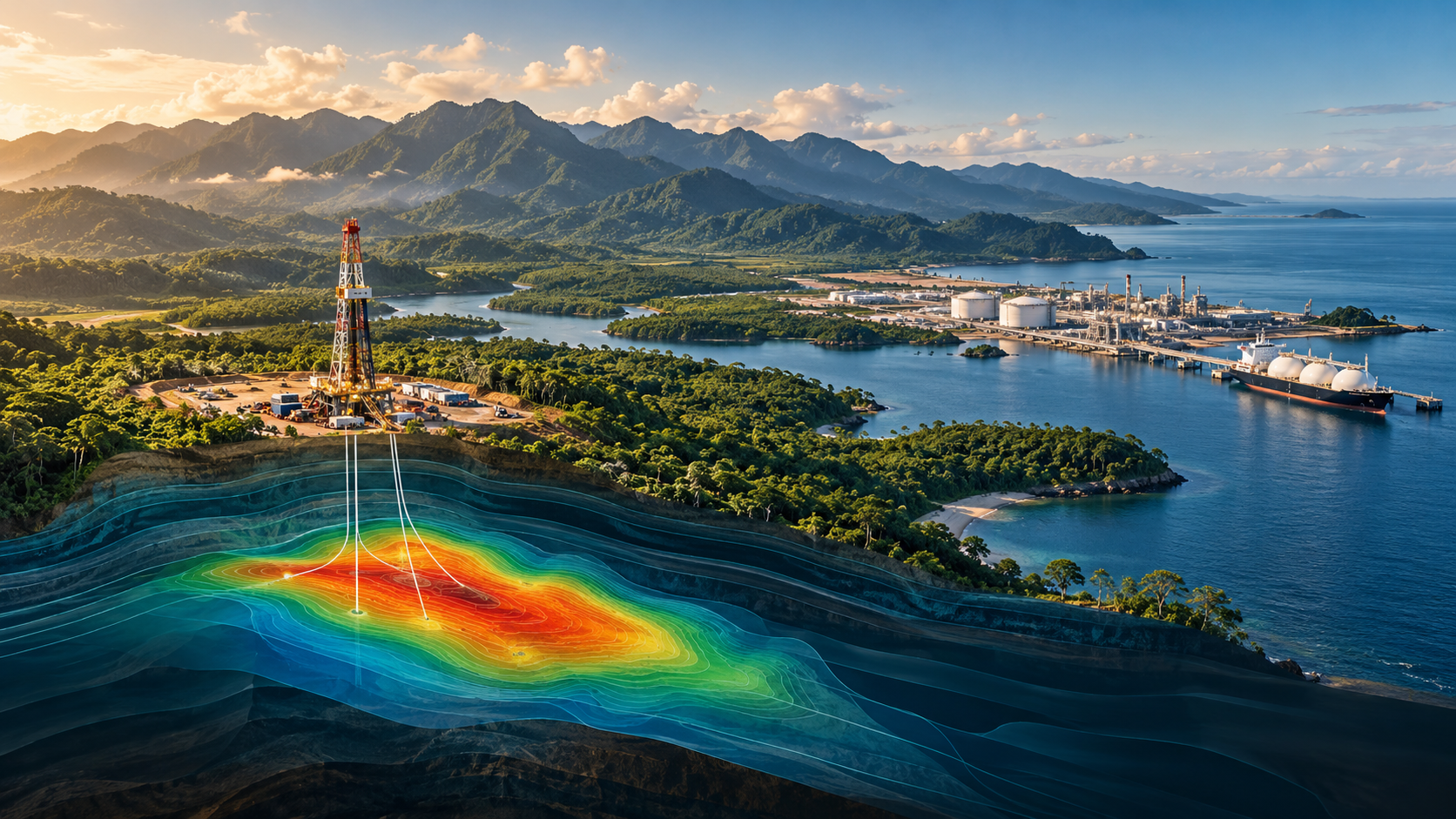
By Cam Bailey July 8, 2026
A new report says Alberta’s energy sector is still in a good position to grow, even though global oil markets remain unpredictable. “We obviously saw elevated oil prices throughout much of this year with the Strait of Hormuz. Right now prices are a little bit lower,” said Deloitte energy partner, Andrew Botterill. “Countries going to need to rebuild on their strategic reserves that they really decimated here in the last few months.” Botterill points to an average WTI price for the remainder of the year around $80 U.S. a barrel. The Deloitte report says global energy prices remained elevated through the second quarter of 2026 as markets continued to grapple with supply disruptions, shifting demand and geopolitical uncertainty. Despite those challenges, Canada and the United States both reached record crude oil export levels, with Alberta’s oil sands playing a major role in production growth. The report notes that producers are choosing projects that cost less and can be developed more quickly, like conventional heavy oil drilling and in-situ operations. This helps companies stay profitable, even when prices drop. Looking ahead, Deloitte forecasts continued production growth, supported by planned pipeline expansions and optimizations that could add about 800,000 barrels per day of export capacity by 2030. “What we’re going to see is this renewed investment in recognition of what the global supply chain is going to kind of shift a little bit,” said Botterill. “Think we’re just going to see a little bit of a shift in the next five years of maybe not everything is going to come from the Middle East.” He points to Asian and European market becoming more reliant on Canada energy. The report says most oil sands development remains concentrated in the Athabasca region, while activity in the Cold Lake and Peace River regions has increasingly shifted toward conventional heavy oil production. It predicts oil prices will fall over the next few years, with WTI crude settling in the $65-$75 U.S per barrel mark. Richard Masson, former CEO of the Alberta Petroleum Marketing Commission calls that a middle of the road scenario. “Very adequate to make a lot of free cash flow from their existing projects,” said Masson. “From Alberta’s point of view, it doesn’t necessarily balance the budget, but it probably goes a long way.” The report came after Alberta Premier Danielle Smith announced separate pipeline proposals with Prime Minister Mark Carney and Ontario Premier Doug Ford, arguing that additional energy infrastructure will be needed to support future production growth. Masson says that forecast will also be able to support future projects “Oil sands projects don’t need $100 to be successful,” he said. “$65-75 the money would allow them to continue to grow, and fill up the Trans Mountain, Enbridge, South Bow and eventually the million barrels a day pipeline if these things can be brought in.” LNG production Robinson Energy, headquartered out of Calgary, was established in May 2022 and develops existing natural gas resources in Papua New Guina. “What’s happening with the Iranian war is that the (disruption) to the Strait of Hormuz has really disrupted the supply of LNG into, the largest marketplace in the world,” said Robinson Energy’s CEO Cam Bailey. Bailey points to a fifth of the world’s gas supply being held up in the Strait of Hormuz during the war. Robinson Energy has accumulated 140 gas wells in Papua New Guinea and will look to capture part of the Asian market. “Whoever captures that marketplace today, will have that secured for a long time coming,” said Bailey. Bailey added the political issues to get gas to market in Canada “have been so difficult.” “Papua New Guinea, those constraints don’t exist,” said Bailey. “That’s part of the reason why we’ve chosen to take Canadian technology and methodologies and apply to a jurisdiction where we’re not hamstrung with those problems.” Botterill anticipates growing demand for LNG over the next five to 10 years.
By Cam Bailey July 6, 2026
Shell’s 2026 LNG Outlook arrives at a pivotal moment for the global energy market. Over the past decade, liquefied natural gas has evolved from a growing component of the global gas market into a critical part of the world’s energy system. Shell’s latest outlook argues that this role is likely to remain significant for decades as global energy demand rises, supply chains become increasingly exposed to geopolitical shocks, and Asian economies continue to expand. The report paints a clear picture: the world needs more reliable energy, and LNG remains one of the key fuels capable of meeting that demand at scale. A Decade of Rapid LNG Growth According to Shell, global LNG trade reached approximately 422 million tonnes in 2025, up from 264 million tonnes in 2016. Over the same period, the LNG industry expanded significantly across virtually every major part of the value chain. The number of LNG-importing countries grew from 36 to 49. Global regasification terminals increased from 124 to 200. The LNG-fuelled shipping fleet expanded dramatically, while global bunkering infrastructure grew alongside it. Perhaps most notably, the actual level of LNG demand reached in 2025 fell within the range Shell had forecast nearly a decade earlier. That growth occurred despite three major disruptions to the global energy system: the COVID-19 pandemic, the Russia-Ukraine war, and the 2026 Middle East crisis. For Shell, that resilience reinforces LNG’s increasingly important role within the global energy system. Energy Security Has Become a Central Issue One of the clearest themes in the 2026 Outlook is the importance of energy security. Recent disruption surrounding the Strait of Hormuz has highlighted the extent to which global energy and commodity flows depend on a relatively small number of strategic corridors. Shell estimates that significant portions of global LNG, crude oil, petrochemical and industrial commodity trade pass through the Strait of Hormuz. The consequences of disruption extend far beyond energy prices. Supply interruptions can affect fertilizer, metals, chemicals, aviation fuels, manufacturing and broader global trade. For the LNG market, the lesson is increasingly clear: supply diversity matters. As buyers and governments evaluate future energy needs, questions of reliability, shipping security, geographic diversification and infrastructure resilience are becoming increasingly important alongside price. LNG Supply Remains Vulnerable to Disruption Shell’s outlook suggests that the Middle East crisis has materially altered expectations for LNG supply growth in 2026. Under more severe disruption scenarios, global LNG exports could experience a rare annual contraction. The market has shown an ability to respond through increased North American exports, cross-basin cargo movements, fuel switching, storage withdrawals and changes in demand. However, these mechanisms do not eliminate the underlying vulnerability of a global market dependent on complex infrastructure and international shipping routes. The report argues that continued investment across LNG production, liquefaction, shipping and regasification infrastructure will be required to strengthen the resilience of the global system. Asia Remains the Long-Term Centre of LNG Demand Growth While short-term energy shocks dominate headlines, Shell’s long-term outlook remains heavily focused on Asia. Economic growth, industrial development, urbanization and energy security are expected to continue driving demand across the region. Emerging Asia, including India and Southeast Asia, is highlighted as one of the most important areas of future growth. Shell projects a widening structural gap between regional gas demand and domestic production over the coming decades. Meeting that gap would require both additional LNG supply and significant investment in downstream infrastructure. The report estimates that more than 140 million tonnes per annum of additional regasification capacity investment could be required in emerging Asian markets by 2050. This creates a long-term opportunity for LNG suppliers capable of delivering competitive and reliable volumes into the region. China Continues to Shape the Global Gas Market China remains another major pillar of the global LNG outlook. While increased domestic gas production and pipeline imports have provided China with greater flexibility in the short term, Shell expects natural gas demand to continue growing over the long term. The report identifies a structural supply gap between future Chinese gas consumption and the country’s domestic production and pipeline supply. LNG is therefore expected to remain an important part of China’s energy mix, supported by continued expansion of import and regasification infrastructure. China’s scale also gives it an increasingly important role in balancing the wider global LNG market. AI and Data Centres Are Changing Electricity Demand Another major development highlighted in Shell’s 2026 Outlook is the effect of artificial intelligence and data centres on power consumption. Japan provides one notable example. Shell points to higher expectations for Japanese electricity demand as AI infrastructure and industrial growth increase power requirements. At the same time, lower renewable energy forecasts may support stronger demand for gas-fired power generation. This trend extends beyond Japan. Rapid growth in data centres, computing infrastructure and electrification is forcing governments and utilities to reassess assumptions about future electricity demand. Reliable, dispatchable energy is becoming increasingly valuable, strengthening the role of natural gas in markets where energy demand is rising faster than new power infrastructure can be developed. The LNG Shipping Market Is Also Expanding LNG is not only a globally traded commodity. It is increasingly becoming a fuel for the shipping industry itself. Shell reports that more than 900 LNG-fuelled vessels are already in operation, with hundreds more on order. The company expects LNG bunkering demand to grow substantially through 2050 as shipping companies seek scalable alternatives capable of lowering emissions while supporting global commercial operations. This creates an additional source of long-term LNG demand beyond traditional power generation and industrial markets. More Investment Will Be Required Perhaps the most important conclusion from Shell’s 2026 Outlook is that continued LNG demand will require continued investment. The report presents a wide range of long-term demand scenarios, reflecting uncertainty around economic growth, climate policy, technology and the global energy transition. Yet across those scenarios, LNG continues to play an important role. Existing production alone will not be sufficient to meet expected future demand. New liquefaction projects currently under construction will add significant supply, particularly from the United States, but further investment may still be required to replace declining production and meet demand growth through 2050. Shell summarizes the future of the LNG market around several themes: Supply diversity. Greater competitiveness. Growing transportation demand. A balanced transition toward lower emissions. Portfolio flexibility for buyers. And a global market capable of responding to disruption. What This Means for the Future of LNG The central message of Shell’s LNG Outlook 2026 is not simply that the world needs more gas. It is that the global energy system increasingly values reliability, flexibility and geographic diversity. The energy shocks of the past decade have demonstrated that resilient supply systems require multiple producers, multiple transportation routes, investment across the entire value chain and access to resources positioned close to major demand centres. At the same time, Asian economic growth, urbanization, AI infrastructure and industrial expansion continue to support a long-term need for secure energy. For emerging LNG regions, this creates an important opportunity. Projects that combine meaningful resource potential with strategic geography, competitive development pathways and access to growing Asian markets may become increasingly important as the global LNG system evolves. Shell’s 2026 Outlook makes one point particularly difficult to ignore: In an increasingly uncertain energy landscape, the world will need not only more energy, but more resilient sources of supply.
By Cam Bailey June 26, 2026
Robinson Energy Rings the Bell at the TSX

WHO WE ARE

Robinson Energy Limited was founded to develop established natural gas discoveries in Papua New Guinea’s Western Region. The Company is advancing resources with proven geology through a clear development pathway that prioritizes early cash flow, disciplined capital deployment, and long‑term LNG commercialization.

OUR VISION

To be Papua New Guinea’s trusted energy partner, delivering safe, efficient operations and meaningful community engagement.

WHERE WE OPERATE

Papua New Guinea — Western Province


Our operations are focused in Papua New Guinea’s Western  Region, a area with proven hydrocarbon discoveries and attractive terms for energy development. Papua New Guinea offers direct access to LNG export markets and a strategic geographic advantage for energy buyers throughout Asia.

LEARN MORE
Liquids-Rich Natural Gas

Our portfolio is focused on natural gas resources with associated condensate and liquids, enhancing project economics and enabling phased commercialization.

Infrastructure-Led Development

Robinson Energy advances assets through a structured development pathway, prioritizing infrastructure solutions that support early production and long-term LNG export opportunities.

Asia-Pacific Energy Markets

Our geographic focus provides a strategic advantage for supplying Asian LNG markets, where demand for reliable, clean-burning energy continues to grow.

OUR COMMITMENT

Robinson Energy is building a focused, technically grounded energy company positioned to supply the next phase of global LNG demand.