Shareholder Update - March 2026
Dear Shareholders,
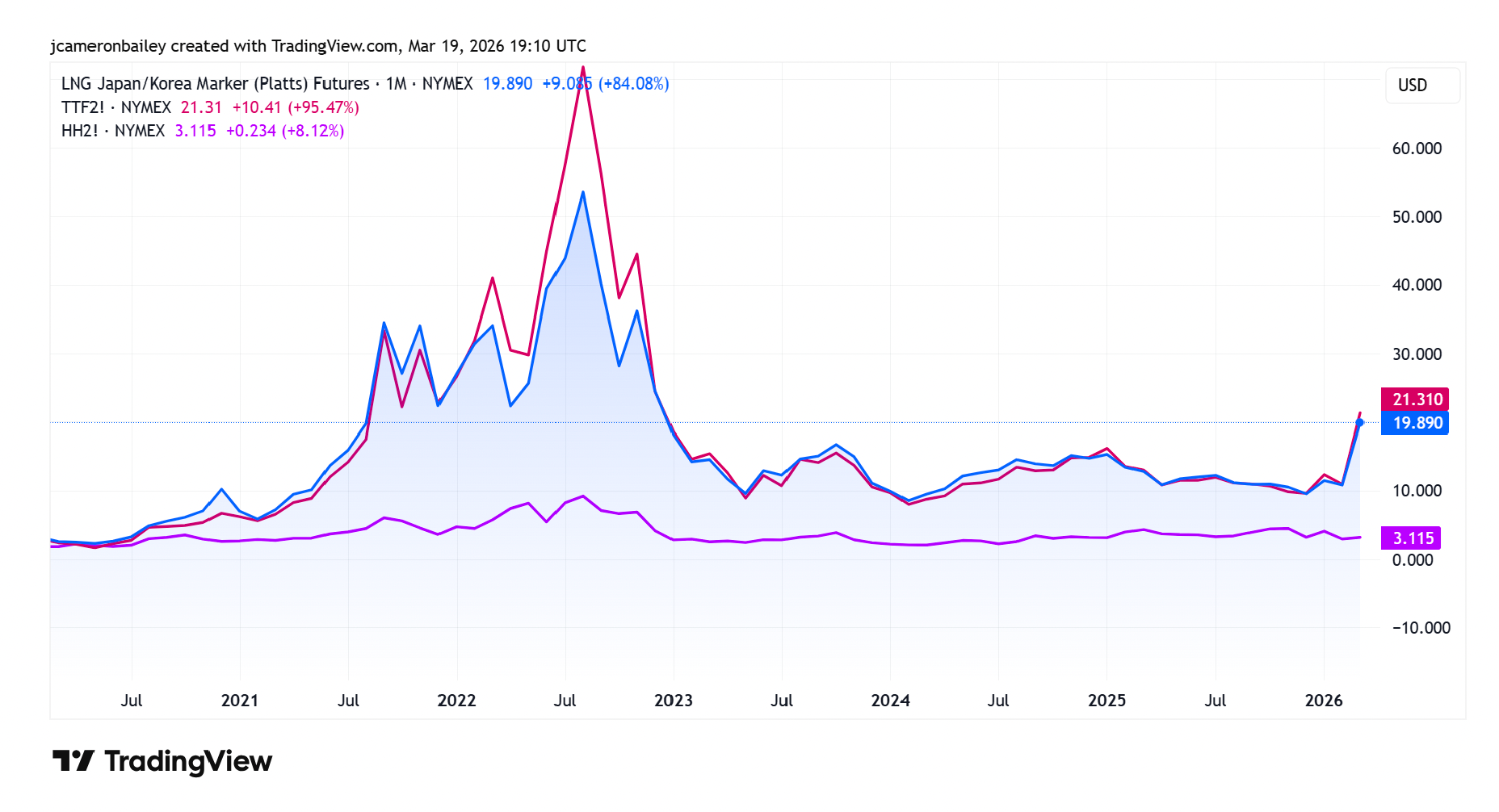
Recent geopolitical developments involving the escalation of conflict with Iran have had a profound and immediate impact on global energy markets particularly liquefied natural gas (LNG). While such events are inherently concerning from a global stability perspective, they are also reshaping the structural dynamics of energy supply in ways that are directly relevant to Robinson Energy’s strategy and asset positioning.
As you may be aware, coordinated strikes and retaliatory actions in the Gulf region have materially disrupted LNG infrastructure, most notably in Qatar. Damage to liquefaction facilities at Ras Laffan has resulted in the loss of approximately 17% of Qatar’s LNG export capacity, with recovery timelines estimated at three to five years . Given that Qatar accounts for roughly 20% of global LNG supply , this represents a significant and sustained supply shock to the global gas market.
Compounding this disruption is the vulnerability of the Strait of Hormuz, through which approximately 20% of global LNG trade transits . The current conflict has constrained shipping flows through this critical chokepoint, further tightening supply availability. Importantly, over 80% of LNG volumes moving through Hormuz are destined for Asian markets , making Asia the most exposed region to supply dislocation.
This has resulted in a rapid repricing of LNG, with buyers—particularly in Asia—actively seeking diversified and geopolitically secure sources of supply . Market participants are increasingly recognizing that the global LNG system is heavily concentrated in a small number of assets and transit routes, creating structural vulnerabilities that are now being exposed in real time.