License Grant PRL 68 - Triceratops

Cam Bailey • October 7, 2026

Robinson Energy Receives Grant Offer for PRL 68, the Triceratops Gas and Condensate Discovery, Papua New Guinea


Three wells have flowed gas at up to 28 MMcf/d from the Triceratops structure.


Calgary, October 6, 2026: Robinson Energy Limited (“Robinson” or the “Company”) (TSXV: ROB | FSE: VK5) is pleased to announce that it has received an offer from the Minister for Petroleum of Papua New Guinea, the Hon. Jimmy Maladina, for the grant of Petroleum Retention Licence 68 (“PRL 68”) covering the Triceratops gas and condensate discovery in the Gulf Province of Papua New Guinea (the “Grant Offer”). The Grant Offer was made under Section 39 of the Oil and Gas Act 1998, following a report from the Petroleum Advisory Board. It is dated October 2, 2026 and was served on the Company by the National Petroleum Authority of Papua New Guinea (the “NPA”) on October 5, 2026.

PRL 68 covers the area formerly held as PRL 39, which lapsed on July 6, 2026. The licence comprises nine graticular blocks and, once granted, will give Robinson a 100% interest for an initial term of five years. The licence contemplates a Company work program with expenditures of US$52 million over the term, including a minimum of one appraisal well in the fourth year. PRLs are designed to allow the holder time to investigate the commerciality of a discovery. To the extent the Company makes a decision to proceed to commercial development, the Company would need to obtain a petroleum development licence, a “PDL”.


Highlights

• A tested discovery. Three wells on the Triceratops structure have flowed gas to surface: Bwata-1 (BP, 1959) at up to 28 MMcf/d, Triceratops-2 (InterOil, 2012) at 27 MMcf/d, and Triceratops-3 (InterOil, 2015) at 17.1 MMcf/d with 200 bbl/d of condensate.

• Independent historical resource estimate. GLJ Petroleum Consultants Ltd. (“GLJ”) estimated gross unrisked best estimate (2C) contingent resources of approximately 352 Bcfe for Triceratops, in an evaluation effective December 31, 2015 and reported in 2016. This is a historical estimate and is not being treated by the Company as a current estimate.

• Located on the Papua LNG trend. Triceratops lies approximately 45 km west northwest of the Elk Antelope field, the resource base for the Papua LNG project.

• Potential path to production. A Triceratops tieback into existing Papua LNG infrastructure offers a potential path to production ahead of the Company’s full Western Province pipeline and LNG development.

• Commercialization concept. Gas tied back to Elk Antelope for tolled liquefaction at Caution Bay, with condensate delivered by pipeline to the Kumul Marine Terminal. Robinson intends to pursue third-party access for up to 50 MMcf/d of gas. No access agreement has been reached with the operator of the Papua LNG project.

• A five-year licence at 100%. The Minister for Petroleum has offered PRL 68 to Robinson at a 100% interest for five years, with a US$52 million work program of geological and geophysical studies, infill 2D seismic, at least one appraisal well and commercial studies. Subject to the terms of the licence, the term may be extended for an additional term, or alternatively, the Company may apply for a PDL.


Field History and Production Test Rates

The Triceratops structure is a carbonate gas and condensate accumulation in the onshore Papuan Basin. Gas was first tested at Bwata-1, drilled by BP in 1959. InterOil Corporation (“InterOil”) returned to the structure in 2005 and drilled two appraisal wells after it. On June 14, 2012, the Department of Petroleum and Energy declared Triceratops a petroleum discovery following the Triceratops-2 test.

Bwata-1
Operator: BP
Year: 1959
Test result: Gas flows up to 28 MMcf/d

Triceratops-1
Operator: InterOil
Year: 2005
Test result: Gas shows

Triceratops-2
Operator: InterOil
Year: 2012
Test result: 27 MMcf/d on DST 9; upper zone DST of 17.6 MMcf/d at a condensate yield of 13.6 to 16.3 bbl/MMcf

Triceratops-3
Operator: InterOil
Year: 2015


Test result: 17.1 MMcf/d gas and 200.3 bbl/d condensate, tubing constrained, 72/64 inch choke

Pressure data from Triceratops-2 indicated that its upper reservoir is in communication with Bwata-1, approximately 3.5 km along trend. Triceratops-3 reached a total depth of 2,090 m measured depth and delivered stabilized rates over several five-hour flow periods. InterOil held the licence until its acquisition by ExxonMobil in 2017, and the licence subsequently lapsed without development.

The test rates above are historical, were reported by the prior operators, and are short-term drill stem and flow test results. They are not necessarily indicative of long-term performance or ultimate recovery.


Historical Resource Estimate

GLJ, an independent qualified reserves evaluator engaged by InterOil, estimated gross unrisked best estimate (2C) contingent resources for the Triceratops discovery of approximately 58.7 MMboe (352 Bcfe), effective December 31, 2015, as reported by InterOil in 2016, the “GLJ Estimate”.

1C (low)
Natural Gas: 151 Bcf
Natural Gas Liquids: 3.3 MMbbl
Total Oil Equivalent: 28.5 MMboe

2C (best)
Natural Gas: 312 Bcf
Natural Gas Liquids: 6.6 MMbbl
Total Oil Equivalent: 58.7 MMboe

3C (high)
Natural Gas: 561 Bcf
Natural Gas Liquids: 11.9 MMbbl
Total Oil Equivalent: 105.5 MMboe

The GLJ Estimate is a “historical estimate” and should not be treated as current. It was prepared for a prior operator, before the lapse of PRL 39, and relies on data the Company has not yet independently verified. The Company considers it relevant because it was prepared by a recognized independent evaluator using the three Triceratops area wells and the seismic then available, and it characterizes the property’s exploration and evaluation history. In addition, significant changes in commodity prices, operating costs, development assumptions, regulatory requirements, technology and other economic and technical factors may have occurred since the GLJ Estimate was prepared. As a result, the assumptions underlying the estimate may no longer be applicable and there can be no assurance that the estimate remains reliable. Readers are cautioned not to place undue reliance on the historical estimate.

A qualified reserves evaluator has not done sufficient work to classify the GLJ Estimate as current reserves or resources, and the Company is not treating it as a current estimate. To upgrade it, the Company expects to recover and reprocess the well logs, test data and seismic, and commission a new independent evaluation under NI 51-101 and the COGE Handbook. Contingent resources are not reserves, and there is no certainty that any portion of the resources will be commercially viable to produce.

At the time of the GLJ Estimate, the project maturity subclass of the estimate was “development unclarified.” Projects are assigned a maturity subclass of “development unclarified” if they are still under evaluation or require significant further appraisal to clarify the potential for development, and where the contingencies have not been fully defined.

“1C”: the “low” estimate is considered to be a conservative estimate of the quantity that will actually be recovered. It is likely that the actual remaining quantities recovered will exceed the low estimate. With the probabilistic methods used, there should be at least a 90 percent probability (P90) that the quantities actually recovered will equal or exceed the low estimate.

“2C”: the “best” estimate is considered to be the best estimate of the quantity that will actually be recovered. It is equally likely that the actual remaining quantities recovered will be greater or less than the best estimate. With the probabilistic methods used, there should be at least a 50 percent probability (P50) that the quantities actually recovered will equal or exceed the best estimate.

“3C”: the “high” estimate is considered to be an optimistic estimate of the quantity that will actually be recovered. It is unlikely that the actual remaining quantities recovered will exceed the high estimate. With the probabilistic methods used, there should be at least a 10 percent probability (P10) that the quantities actually recovered will equal or exceed the high estimate.

Barrels of oil equivalent (boe) and Bcfe figures convert natural gas and condensate at a ratio of six thousand cubic feet of gas to one barrel. This ratio is based on an energy equivalency conversion method at the burner tip and does not represent a value equivalency at the wellhead.

Commercialization Plan

Robinson’s plan is to bring Triceratops into production as a tieback to the Papua LNG system. The plan has four stages.

1. Data recovery and evaluation. Recover the original well logs, test data and seismic from public and private sources, reprocess the seismic, and commission an independent NI 51-101 resource evaluation. This work forms the prospectivity review committed for the first two years of the licence.

2. Access and offtake. Pursue third-party access for up to 50 MMcf/d of gas into the Papua LNG pipeline and LNG facility, including gas processing, transport to Caution Bay and tolled liquefaction, and arrange condensate delivery by pipeline to the Kumul Marine Terminal for sale at market prices.

3. Appraisal and development drilling. Acquire infill 2D seismic and drill Triceratops-4 and Triceratops-5 to confirm deliverability and serve as producers, subject to the results of the evaluation. The licence commits the Company to at least one appraisal well.

4. Facilities and first production. Construct a production facility and a gathering pipeline to the Elk Antelope system, with a target rate of up to 50 MMcf/d of gas and associated condensate.

Triceratops complements the Company’s full development plan, the aggregated Western Province pipeline and LNG export system. Timing and each stage remain subject to financing, completion of the licence grant, regulatory approvals, access terms with the Papua LNG participants, and the results of the planned technical work.

Third-party access. Robinson has not entered into any agreement with the operator of the Papua LNG project, or with any of its participants, for third-party access to the project’s pipeline or LNG facility. There is no assurance that access will be granted on acceptable terms, in the volumes sought, or at all. Without such access, the tieback concept described in this release could not proceed as planned.


Management Comment

“Triceratops is a discovery that has already flowed gas from three wells, and it sits on the same trend as the fields feeding Papua LNG,” said Cam Bailey, Executive Chairman of Robinson. “It gives us a potential path to production that can be pursued independently of our larger Western Province development. Our first priority is to rebuild the technical record and put a current independent evaluation behind the asset. At the same time, we will open discussions on access to the Papua LNG system. We thank the Minister for Petroleum, the Hon. Jimmy Maladina, the Petroleum Advisory Board, the National Petroleum Authority and the Government of Papua New Guinea for their confidence in Robinson.”

About Robinson Energy Limited

Robinson is an upstream natural gas company focused on the appraisal and development of its 100% held Petroleum Retention Licence 62 (“PRL 62”), located in the Western Province of Papua New Guinea. The Company’s strategy is to advance the exploration and development of PRL 62’s resource potential to deliver reliable, lower-carbon energy to domestic Papua New Guinea and export markets across Asia, drawing on Canadian technical and capital-markets expertise and the established energy-services footprint in the region.

For Further Information, Please Contact

J. Cameron Bailey
Executive Chairman

jcbailey@robinsonenergy.ca

+1 403 680 0434

Neil Bothwell
Chief Financial Officer

neil@robinsonenergy.ca

+1 403 874 2769

Neither the Exchange nor its Regulation Services Provider, as that term is defined in the policies of the Exchange, accepts responsibility for the adequacy or accuracy of this release.


Cautionary Statement Regarding Forward-Looking Information

This news release includes certain “forward-looking statements” under applicable Canadian securities legislation, collectively referred to as “forward-looking information.” Forward-looking information is generally identifiable by words such as “anticipates,” “believes,” “expects,” “intends,” “plans,” “proposes,” “targets,” “will,” “may,” “could,” “should” and similar expressions suggesting future outcomes or events.

Forward-looking information contained in this news release includes, but is not limited to, statements concerning: the Company’s intention to satisfy the conditions of the Grant Offer, including the request for grant, the lodging of security and the payment of the first annual fee, and the anticipated formal grant of PRL 68; the terms of PRL 68, including the Company’s anticipated 100% interest, the five-year term, the required work program and minimum expenditure commitment of US$52 million, and the funding of that program; the recovery and reprocessing of historical well logs, test data and seismic information; the commissioning and timing of a new independent evaluation under National Instrument 51-101 and the COGE Handbook; the Company’s plans to pursue third-party access to the Papua LNG pipeline, gas-processing and LNG facilities and the Kumul Marine Terminal; the potential tieback of Triceratops to the Papua LNG system; the potential transportation, processing, liquefaction and sale of natural gas and condensate produced from Triceratops; the negotiation and execution of access, transportation, processing, liquefaction, offtake or other commercial arrangements; the potential drilling of the Triceratops-4 and Triceratops-5 wells and their potential use as production wells; the construction of production facilities, gathering pipelines and related infrastructure; potential production of up to 50 MMcf/d of natural gas and associated condensate; the timing of first gas, including the target of first gas in early 2030; the ability to bring Triceratops into production before the development of the Company’s proposed Western Province pipeline and LNG export system; and the Company’s broader plans to aggregate Western Province gas resources and supply North Asian LNG markets.


The forward-looking information in this news release is based on assumptions that management considers reasonable as of the date hereof, including assumptions concerning: the Company’s timely acceptance of, and satisfaction of the conditions attached to, the Grant Offer; the formal grant, validity and continuation in good standing of PRL 68 on the anticipated terms; the Company’s ability to obtain access to complete and usable historical technical information; the quality, completeness and utility of the historical well, test and seismic data; the results of reprocessing, technical interpretation, appraisal activities and an updated independent resource evaluation; the presence, quantity, quality, deliverability and commercial potential of hydrocarbons at Triceratops; the availability of equipment, personnel, services and infrastructure; the technical and commercial feasibility of connecting Triceratops to the Papua LNG system; the availability of capacity in the applicable pipeline, processing, LNG and condensate transportation infrastructure; the willingness of the owners and operators of that infrastructure to negotiate and grant access on commercially acceptable terms; the receipt of required government, regulatory, environmental, landowner and third-party approvals; the availability of financing on acceptable terms; future commodity prices, operating costs, capital costs and fiscal terms; and the absence of material adverse changes in applicable laws, regulatory requirements, market conditions, infrastructure availability or project economics.


Forward-looking information is subject to known and unknown risks, uncertainties and other factors that could cause actual results or events to differ materially from those expressed or implied by such information. These risks and uncertainties include, but are not limited to: the Grant Offer not being accepted in the required period or PRL 68 not being formally granted on the terms anticipated or at all; the imposition of additional conditions or work commitments; challenges concerning the validity, continuation or renewal of PRL 68; the inability to obtain or adequately reconstruct the historical technical record; historical data proving incomplete, inaccurate or unsuitable for current evaluation purposes; the results of seismic reprocessing, appraisal work or an updated independent evaluation differing materially from historical information or management’s expectations; uncertainty concerning the existence, classification, volume, deliverability, development potential and commercial viability of any resources; unsuccessful or delayed appraisal drilling; geological, reservoir, drilling, completion, construction and operating risks; cost increases, supply-chain constraints and delays; the inability to obtain required financing; changes in commodity prices, operating costs, capital costs, exchange rates or fiscal terms; the inability to obtain necessary governmental, regulatory, environmental, landowner or other approvals; changes in the laws, policies or political, economic or operating environment of Papua New Guinea; the unavailability of capacity in the Papua LNG system or other required infrastructure; the inability to negotiate third-party access, transportation, processing, liquefaction, condensate handling, offtake or other commercial arrangements on acceptable terms or at all; dependence on third-party infrastructure owners and operators; delays affecting the Papua LNG project or related infrastructure; and other risks inherent in the exploration, appraisal, development and production of oil and natural gas.

In particular, the Company has not entered into any agreement with the operator or participants of the Papua LNG project for access to the project’s pipeline, processing or LNG facilities, and there can be no assurance that such access will be available in the capacity sought, on acceptable terms or at all. If the required third-party access and commercial arrangements are not obtained, the tieback and commercialization concept described in this news release may not proceed as currently contemplated.


Although the Company believes that the assumptions and expectations reflected in the forward-looking information are reasonable as of the date of this news release, there can be no assurance that they will prove to be correct. Actual results and future events could differ materially from those anticipated. Readers are therefore cautioned not to place undue reliance on forward-looking information. The forward-looking information contained in this news release is made as of the date hereof, and the Company undertakes no obligation to update or revise any forward-looking information, whether as a result of new information, future events or otherwise, except as required by applicable securities laws.
By Cam Bailey • July 8, 2026
A new report says Alberta’s energy sector is still in a good position to grow, even though global oil markets remain unpredictable. “We obviously saw elevated oil prices throughout much of this year with the Strait of Hormuz. Right now prices are a little bit lower,” said Deloitte energy partner, Andrew Botterill. “Countries going to need to rebuild on their strategic reserves that they really decimated here in the last few months.” Botterill points to an average WTI price for the remainder of the year around $80 U.S. a barrel. The Deloitte report says global energy prices remained elevated through the second quarter of 2026 as markets continued to grapple with supply disruptions, shifting demand and geopolitical uncertainty. Despite those challenges, Canada and the United States both reached record crude oil export levels, with Alberta’s oil sands playing a major role in production growth. The report notes that producers are choosing projects that cost less and can be developed more quickly, like conventional heavy oil drilling and in-situ operations. This helps companies stay profitable, even when prices drop. Looking ahead, Deloitte forecasts continued production growth, supported by planned pipeline expansions and optimizations that could add about 800,000 barrels per day of export capacity by 2030. “What we’re going to see is this renewed investment in recognition of what the global supply chain is going to kind of shift a little bit,” said Botterill. “Think we’re just going to see a little bit of a shift in the next five years of maybe not everything is going to come from the Middle East.” He points to Asian and European market becoming more reliant on Canada energy. The report says most oil sands development remains concentrated in the Athabasca region, while activity in the Cold Lake and Peace River regions has increasingly shifted toward conventional heavy oil production. It predicts oil prices will fall over the next few years, with WTI crude settling in the $65-$75 U.S per barrel mark. Richard Masson, former CEO of the Alberta Petroleum Marketing Commission calls that a middle of the road scenario. “Very adequate to make a lot of free cash flow from their existing projects,” said Masson. “From Alberta’s point of view, it doesn’t necessarily balance the budget, but it probably goes a long way.” The report came after Alberta Premier Danielle Smith announced separate pipeline proposals with Prime Minister Mark Carney and Ontario Premier Doug Ford, arguing that additional energy infrastructure will be needed to support future production growth. Masson says that forecast will also be able to support future projects “Oil sands projects don’t need $100 to be successful,” he said. “$65-75 the money would allow them to continue to grow, and fill up the Trans Mountain, Enbridge, South Bow and eventually the million barrels a day pipeline if these things can be brought in.” LNG production Robinson Energy, headquartered out of Calgary, was established in May 2022 and develops existing natural gas resources in Papua New Guina. “What’s happening with the Iranian war is that the (disruption) to the Strait of Hormuz has really disrupted the supply of LNG into, the largest marketplace in the world,” said Robinson Energy’s CEO Cam Bailey. Bailey points to a fifth of the world’s gas supply being held up in the Strait of Hormuz during the war. Robinson Energy has accumulated 140 gas wells in Papua New Guinea and will look to capture part of the Asian market. “Whoever captures that marketplace today, will have that secured for a long time coming,” said Bailey. Bailey added the political issues to get gas to market in Canada “have been so difficult.” “Papua New Guinea, those constraints don’t exist,” said Bailey. “That’s part of the reason why we’ve chosen to take Canadian technology and methodologies and apply to a jurisdiction where we’re not hamstrung with those problems.” Botterill anticipates growing demand for LNG over the next five to 10 years.
By Cam Bailey • July 6, 2026
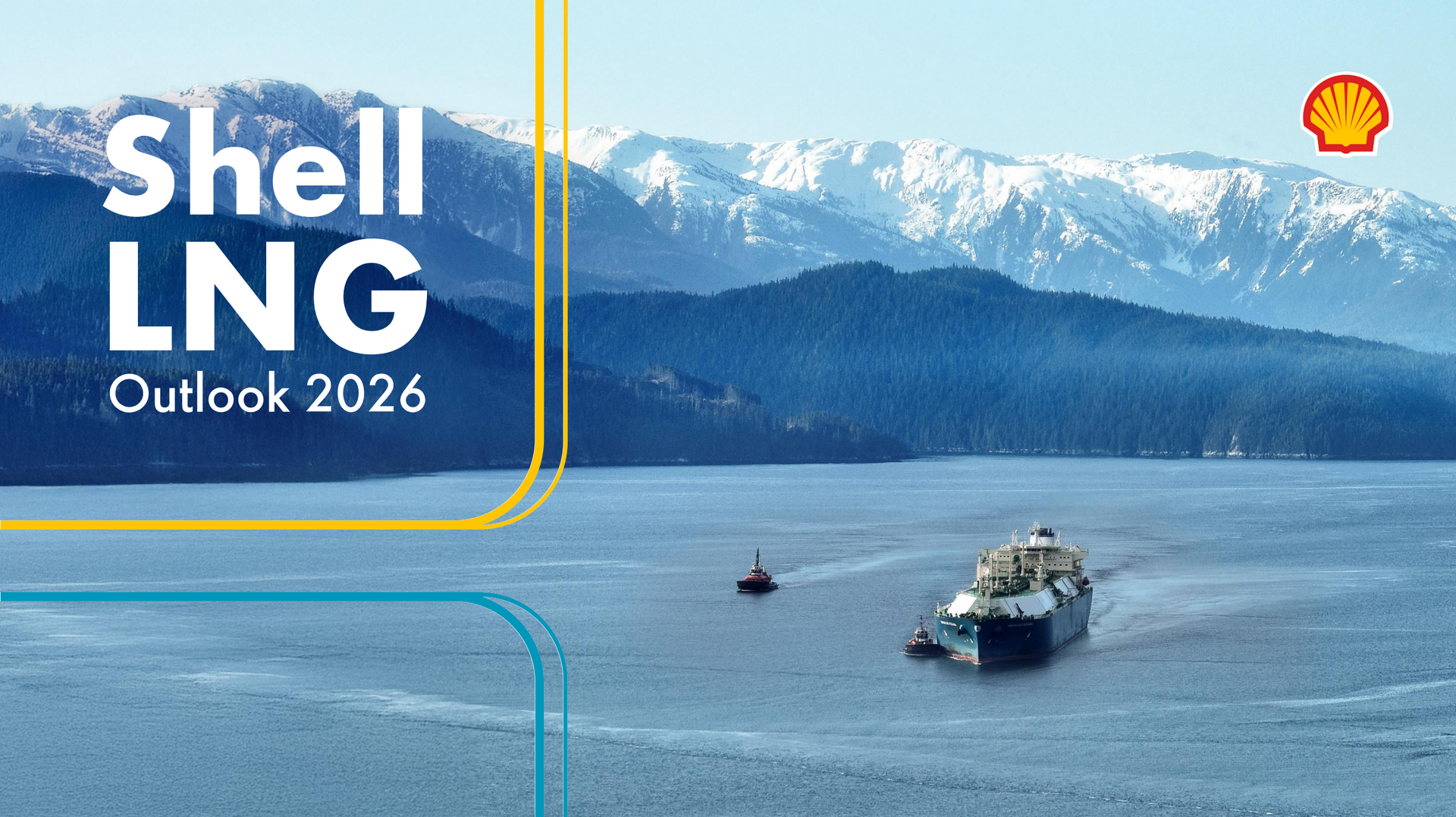
Shell’s 2026 LNG Outlook arrives at a pivotal moment for the global energy market. Over the past decade, liquefied natural gas has evolved from a growing component of the global gas market into a critical part of the world’s energy system. Shell’s latest outlook argues that this role is likely to remain significant for decades as global energy demand rises, supply chains become increasingly exposed to geopolitical shocks, and Asian economies continue to expand. The report paints a clear picture: the world needs more reliable energy, and LNG remains one of the key fuels capable of meeting that demand at scale. A Decade of Rapid LNG Growth According to Shell, global LNG trade reached approximately 422 million tonnes in 2025, up from 264 million tonnes in 2016. Over the same period, the LNG industry expanded significantly across virtually every major part of the value chain. The number of LNG-importing countries grew from 36 to 49. Global regasification terminals increased from 124 to 200. The LNG-fuelled shipping fleet expanded dramatically, while global bunkering infrastructure grew alongside it. Perhaps most notably, the actual level of LNG demand reached in 2025 fell within the range Shell had forecast nearly a decade earlier. That growth occurred despite three major disruptions to the global energy system: the COVID-19 pandemic, the Russia-Ukraine war, and the 2026 Middle East crisis. For Shell, that resilience reinforces LNG’s increasingly important role within the global energy system. Energy Security Has Become a Central Issue One of the clearest themes in the 2026 Outlook is the importance of energy security. Recent disruption surrounding the Strait of Hormuz has highlighted the extent to which global energy and commodity flows depend on a relatively small number of strategic corridors. Shell estimates that significant portions of global LNG, crude oil, petrochemical and industrial commodity trade pass through the Strait of Hormuz. The consequences of disruption extend far beyond energy prices. Supply interruptions can affect fertilizer, metals, chemicals, aviation fuels, manufacturing and broader global trade. For the LNG market, the lesson is increasingly clear: supply diversity matters. As buyers and governments evaluate future energy needs, questions of reliability, shipping security, geographic diversification and infrastructure resilience are becoming increasingly important alongside price. LNG Supply Remains Vulnerable to Disruption Shell’s outlook suggests that the Middle East crisis has materially altered expectations for LNG supply growth in 2026. Under more severe disruption scenarios, global LNG exports could experience a rare annual contraction. The market has shown an ability to respond through increased North American exports, cross-basin cargo movements, fuel switching, storage withdrawals and changes in demand. However, these mechanisms do not eliminate the underlying vulnerability of a global market dependent on complex infrastructure and international shipping routes. The report argues that continued investment across LNG production, liquefaction, shipping and regasification infrastructure will be required to strengthen the resilience of the global system. Asia Remains the Long-Term Centre of LNG Demand Growth While short-term energy shocks dominate headlines, Shell’s long-term outlook remains heavily focused on Asia. Economic growth, industrial development, urbanization and energy security are expected to continue driving demand across the region. Emerging Asia, including India and Southeast Asia, is highlighted as one of the most important areas of future growth. Shell projects a widening structural gap between regional gas demand and domestic production over the coming decades. Meeting that gap would require both additional LNG supply and significant investment in downstream infrastructure. The report estimates that more than 140 million tonnes per annum of additional regasification capacity investment could be required in emerging Asian markets by 2050. This creates a long-term opportunity for LNG suppliers capable of delivering competitive and reliable volumes into the region. China Continues to Shape the Global Gas Market China remains another major pillar of the global LNG outlook. While increased domestic gas production and pipeline imports have provided China with greater flexibility in the short term, Shell expects natural gas demand to continue growing over the long term. The report identifies a structural supply gap between future Chinese gas consumption and the country’s domestic production and pipeline supply. LNG is therefore expected to remain an important part of China’s energy mix, supported by continued expansion of import and regasification infrastructure. China’s scale also gives it an increasingly important role in balancing the wider global LNG market. AI and Data Centres Are Changing Electricity Demand Another major development highlighted in Shell’s 2026 Outlook is the effect of artificial intelligence and data centres on power consumption. Japan provides one notable example. Shell points to higher expectations for Japanese electricity demand as AI infrastructure and industrial growth increase power requirements. At the same time, lower renewable energy forecasts may support stronger demand for gas-fired power generation. This trend extends beyond Japan. Rapid growth in data centres, computing infrastructure and electrification is forcing governments and utilities to reassess assumptions about future electricity demand. Reliable, dispatchable energy is becoming increasingly valuable, strengthening the role of natural gas in markets where energy demand is rising faster than new power infrastructure can be developed. The LNG Shipping Market Is Also Expanding LNG is not only a globally traded commodity. It is increasingly becoming a fuel for the shipping industry itself. Shell reports that more than 900 LNG-fuelled vessels are already in operation, with hundreds more on order. The company expects LNG bunkering demand to grow substantially through 2050 as shipping companies seek scalable alternatives capable of lowering emissions while supporting global commercial operations. This creates an additional source of long-term LNG demand beyond traditional power generation and industrial markets. More Investment Will Be Required Perhaps the most important conclusion from Shell’s 2026 Outlook is that continued LNG demand will require continued investment. The report presents a wide range of long-term demand scenarios, reflecting uncertainty around economic growth, climate policy, technology and the global energy transition. Yet across those scenarios, LNG continues to play an important role. Existing production alone will not be sufficient to meet expected future demand. New liquefaction projects currently under construction will add significant supply, particularly from the United States, but further investment may still be required to replace declining production and meet demand growth through 2050. Shell summarizes the future of the LNG market around several themes: Supply diversity. Greater competitiveness. Growing transportation demand. A balanced transition toward lower emissions. Portfolio flexibility for buyers. And a global market capable of responding to disruption. What This Means for the Future of LNG The central message of Shell’s LNG Outlook 2026 is not simply that the world needs more gas. It is that the global energy system increasingly values reliability, flexibility and geographic diversity. The energy shocks of the past decade have demonstrated that resilient supply systems require multiple producers, multiple transportation routes, investment across the entire value chain and access to resources positioned close to major demand centres. At the same time, Asian economic growth, urbanization, AI infrastructure and industrial expansion continue to support a long-term need for secure energy. For emerging LNG regions, this creates an important opportunity. Projects that combine meaningful resource potential with strategic geography, competitive development pathways and access to growing Asian markets may become increasingly important as the global LNG system evolves. Shell’s 2026 Outlook makes one point particularly difficult to ignore: In an increasingly uncertain energy landscape, the world will need not only more energy, but more resilient sources of supply.
By Cam Bailey • June 26, 2026
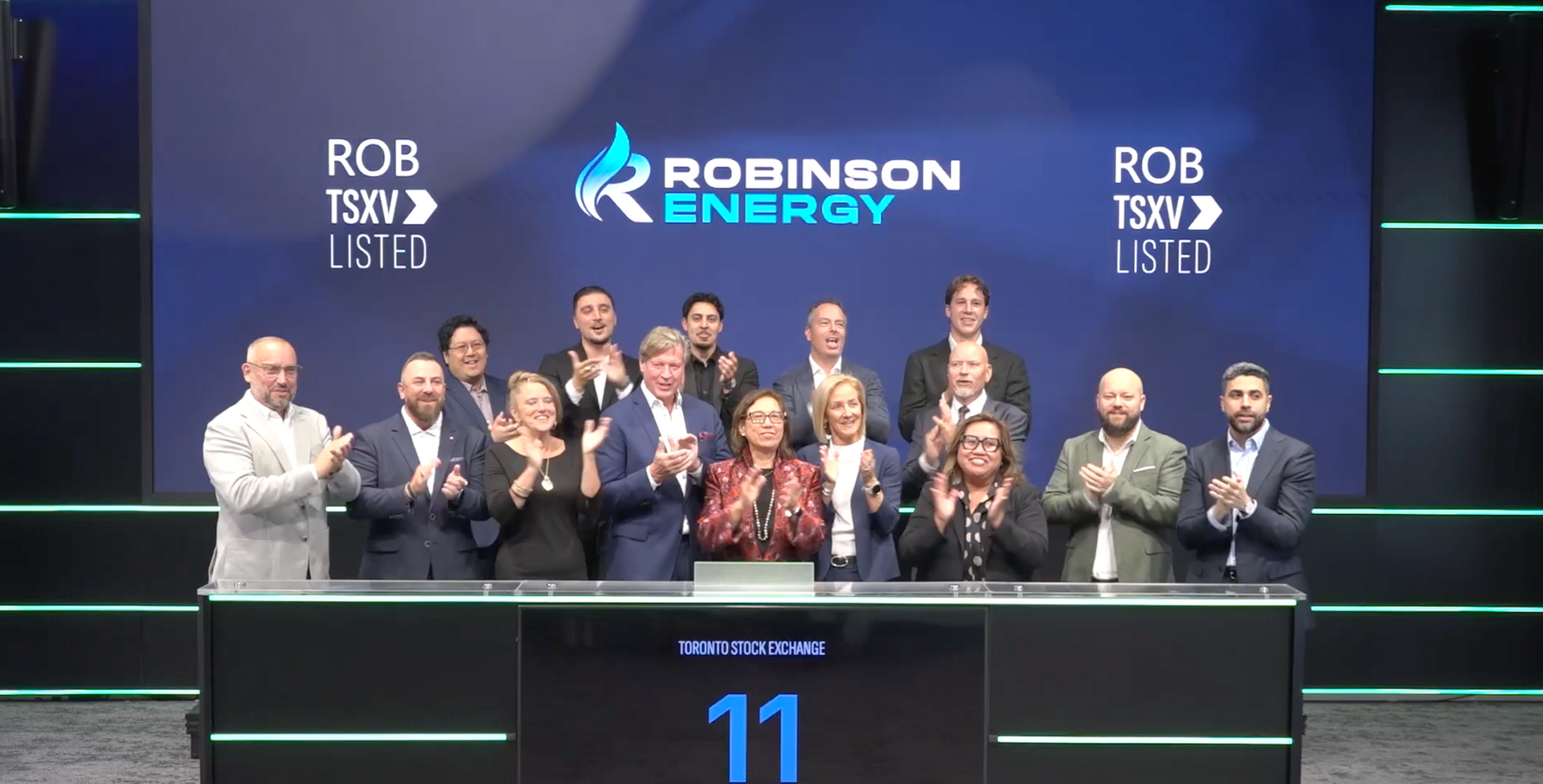
Robinson Energy Rings the Bell at the TSX
By Cam Bailey • June 19, 2026
June 17, 2026 ROBINSON ENERGY LIMITED COMPLETES REVERSE TAKEOVER TRANSACTION OF COBRA VENTURE CORPORATION Vancouver, British Columbia, June 17, 2026, Newsfile Corp. - Robinson Energy Limited, formerly Cobra Venture Corporation, the “Corporation”, is pleased to announce that the Corporation has completed its previously announced “Reverse Takeover”, as such term is defined by the Exchange Policy 5.2 - Changes of Business and Reverse Takeovers, the “Transaction”, involving Cobra Venture Corporation, “Cobra”, and Robinson Energy Limited, “Robinson”, pursuant to an amalgamation agreement dated March 17, 2026, the “Amalgamation Agreement”, among Cobra, Robinson, and a subsidiary of Robinson, “Subco”. Pursuant to the Amalgamation Agreement, the Corporation acquired all of the issued and outstanding shares of Robinson, the “Robinson Shares”, by means of a “three cornered amalgamation”, the “Amalgamation”, whereby Subco and Robinson amalgamated to form Robinson Energy Canada Ltd. which continues as a wholly-owned subsidiary of the Corporation. As part of the Transaction, the Corporation has changed its name to “Robinson Energy Limited”, and consolidated its shares on a 10:1 basis, the “Consolidation”. No fractional securities were issued as a result of the Consolidation. The new CUSIP number for the post-Consolidation shares, the “Resulting Issuer Shares”, will be 770767101 and the new ISIN will be CA7707671011. Holders of Robinson Shares received Resulting Issuer Shares in exchange for their Robinson Shares at an exchange ratio of 1.7947 Resulting Issuer Share per Robinson Share, subject to adjustments in accordance with the Amalgamation Agreement. Pursuant to the Amalgamation, the Corporation issued an aggregate of 14,796,887 Resulting Issuer Shares to former Robinson shareholders at a deemed price of $2.00 per Resulting Issuer Share. There will be 16,617,762 Resulting Issuer Shares issued and outstanding upon listing. Trading of the Resulting Issuer Shares remains halted, and subject to final TSX Venture Exchange, “Exchange”, approval of the Transaction which will occur upon issuance of a final bulletin in respect of the Transaction by the Exchange which is expected on or about June 18, 2026. Subject to the issuance of the final bulletin, it is anticipated that trading in the Resulting Issuer Shares will commence on the Exchange under the symbol “ROB” on June 22, 2026. The Corporation will continue the business of Robinson, and intends to remain listed as a Tier 2 Oil and Gas Issuer on the Exchange, subject to final Exchange approval. The head office of the Corporation is located at Suite 800, 205 5th Ave SW, Calgary, AB T2P 2V7 and the registered office is located at 421 7 Ave SW, Suite 4000, Calgary, AB T2P 4K9. Escrow and Resale As part of the Transaction: The Corporation entered into an escrow agreement with Computershare Trust Company of Canada and certain insiders of the Corporation providing for the escrow of an aggregate of 4,421,542 Resulting Issuer Shares, to be released on a Tier 2 escrow release schedule in accordance with Exchange Policy 5.4 - Capital Structure, Escrow and Resale Restriction, “Policy 5.4”; and An aggregate of 6,540,685 Resulting Issuer Shares will be subject to Seed Share Resale Restrictions in accordance with Policy 5.4, with 20% released on each of the date of the final Exchange bulletin and the dates that are 3, 6, 9, and 12 months thereafter. Adoption of Stock Option Plan In connection with the closing of the Transaction, the Corporation intends to adopt the option plan of Robinson, the “Option Plan”, subject to final acceptance of the Exchange. The Option Plan permits the grant of stock options to directors, officers, employees, consultants and other eligible participants of the Corporation. The Corporation has granted 1,067,985 stock options, “Resulting Issuer Options”, under the Option Plan at an exercise price of $2.00 per Resulting Issuer Share to certain directors, officers, employees and consultants as of the date hereof. The Resulting Issuer Options will vest at 8.333% at the end of each financial quarter following the date of grant, and will expire 4 years from the date of grant. Board of Directors and Management The board of directors of the Corporation is comprised of J. Cameron Bailey, John R. King, R. Bradley Hurtubise, and Randolph M. Charron. Management will consist of J. Cameron Bailey as President & Chief Executive Officer, “CEO”, Neil Bothwell as Chief Financial Officer, Pradeep Bhatnagar as Vice-President, Exploration, and Jack Schroder has been appointed as Corporate Secretary. Appointment of Auditors Concurrent with the closing of the Transaction, MNP LLP was appointed auditor of the Corporation. In connection with the Transaction the Corporation has changed its financial year end to September 30, being Robinson’s current year end. Oil and Gas Asset Disposition Pursuant to the Amalgamation Agreement and the receipt of disinterested shareholder approval via ordinary resolution, the Corporation completed the disposition of its 14.665% working interest in 4 initial test wells located in Gull Lake, Saskatchewan, the “Oil and Gas Asset Sale”, for aggregate proceeds of $275,000. The Oil and Gas Asset Sale is more particularly described in the oil and gas asset sale agreement, the “Oil and Gas Asset Sale Agreement”, between the Corporation and 2788570 Alberta Ltd., as further described in the Oil and Gas Asset Sale Agreement appended to, and described within, the joint management information circular of Cobra and Robinson dated May 14, 2026. Early Warning Disclosure Upon the completion of the Transaction, J. Cameron Bailey, President, CEO and Director of the Corporation, holds, directly or indirectly, or exercises control or direction over an aggregate of 3,589,400 Resulting Issuer Shares, and stock options to acquire 332,355 Resulting Issuer Shares, representing approximately 21.60% of the issued and outstanding Resulting Issuer Shares on a non-diluted basis, and approximately 23.14% on a partially-diluted basis, assuming the exercise of Mr. Bailey’s Resulting Issuer Options only. Prior to the completion of the Transaction, Mr. Bailey did not beneficially own, or exercise control or direction over, any securities of the Corporation. Mr. Bailey acquired these securities for investment purposes and may, from time to time, acquire additional securities of the Corporation or dispose of such securities as he may deem appropriate. For the purposes of National Instrument 62-103 - The Early Warning System and Related Take-Over Bid and Insider Reporting Issues, “NI 62-103”, early warning reporting, the address of Mr. Bailey is 800, 205 5th Avenue SW, Calgary, AB T2P 2V7. Upon the completion of the Transaction, Anubhav Yadav, holds, directly or indirectly, or exercises control or direction over an aggregate of 2,153,640 Resulting Issuer Shares, representing 12.96% of the issued and outstanding Resulting Issuer Shares on a non-diluted basis. Prior to the completion of the Transaction, Mr. Yadav did not beneficially own, or exercise control or direction over, any securities of the Corporation. Mr. Yadav acquired these securities for investment purposes and may, from time to time, acquire additional securities of the Corporation or dispose of such securities as he may deem appropriate. For the purposes of NI 62-103 early warning reporting, the address of Mr. Yadav is 14 The Avenue North Sydney 2060, NSW, Australia. Further Information Further details regarding the Transaction are contained in the joint management information circular of Cobra and Robinson dated May 14, 2026, filed under the Corporation’s profile on SEDAR+. The Exchange has in no way passed upon the merits of the Transaction and has neither approved nor disapproved the contents of this news release. Yours sincerely, J. Cameron Bailey President & Chief Executive Officer Robinson Energy Limited www.robinson-energy.com
By Cam Bailey • June 3, 2026
May 19, 2026 Dear Shareholders, We are writing to provide shareholders with a brief corporate update regarding the proposed reverse takeover transaction with Cobra Venture Corporation and recent investor materials prepared in connection with Robinson Energy’s Western Region strategy in Papua New Guinea. Shareholder Meeting Date Change Due to the timing associated with completion of the TSX Venture Exchange review process and the finalization of mailing materials, the date of the shareholder meeting relating to the proposed reverse takeover transaction with Cobra Venture Corporation has been changed from June 5, 2026 to June 12, 2026. The Company currently expects the joint management information circular and related meeting materials to be mailed shortly. Subject to shareholder approval and receipt of final regulatory approvals, Robinson Energy expects the combined entity to commence trading on the TSX Venture Exchange shortly thereafter. Seawolf Research Report Attached to this update is a recently prepared independent research report by Seawolf Research outlining Robinson Energy’s strategic positioning within the global LNG market and the Company’s development plans in Papua New Guinea. The report highlights several key themes, including: • Robinson Energy’s position within the Western Region gas aggregation initiative; • The strategic importance of PRL 62 and surrounding licences; • Growing long-term LNG demand across Asia-Pacific markets; • Increasing global electricity demand associated with AI infrastructure and electrification trends; and • Robinson Energy’s exposure to geographically secure, Asia-adjacent LNG supply. The report also discusses the broader macro environment for LNG markets, infrastructure development, and long-cycle natural gas demand growth. The Seawolf Research report is available on Robinson Energy’s website at www.robinson-energy.com. Valuation Context The Seawolf Research report also discusses the broader strategic valuation framework for Papua New Guinea contingent gas resources and highlights historical transaction benchmarks within the PNG LNG sector. In particular, the report references the historical ExxonMobil and Total transactions involving InterOil’s Elk/Antelope discoveries, which established important precedent valuation metrics for certified contingent gas resources in Papua New Guinea prior to final development sanction. While PRL 62 is smaller in scale than Elk/Antelope and is expected to form part of a broader aggregated Western Region development strategy, Robinson Energy believes several characteristics of PRL 62 distinguish it as a strategically important asset within PNG’s emerging third LNG corridor, including: • Approximately 1.1–1.2 Tcf of independently evaluated contingent resources; • Proven liquids-rich Foreland Basin sandstone reservoirs; • Strategic relevance to Western Region aggregation infrastructure concepts; and • Direct proximity to Asia-Pacific LNG markets. The report notes that public market valuations for contingent gas resources have historically differed materially from strategic industrial buyer valuations, particularly where assets possess a credible pathway toward LNG commercialization and infrastructure integration. As government-led aggregation initiatives continue to advance in Papua New Guinea’s Western Region, Robinson Energy believes the strategic significance of PRL 62 and surrounding regional gas resources may become increasingly recognized within both public and industry valuation frameworks. Shareholders should note that the Seawolf Research report is currently being updated to incorporate additional market analysis, updated valuation comparisons, and recent regulatory developments associated with the National Petroleum Authority aggregation directive process in Papua New Guinea. An updated version of the report is expected to be released in due course. The Company believes the ongoing strengthening of LNG fundamentals, combined with the increasing strategic focus on Western Region gas aggregation by PNG authorities, continues to support Robinson Energy’s long-term positioning as a potential future participant in PNG’s next major LNG development corridor. We appreciate the continued support of our shareholders and look forward to providing further updates in the coming weeks as the transaction process advances. Yours sincerely, J. Cameron Bailey President & Chief Executive Officer Robinson Energy Limited www.robinson-energy.com
By Cam Bailey • June 3, 2026
May 5, 2026 Dear Shareholders, In our letter of March 19, we set out the implications of the strikes on Qatar's Ras Laffan complex for global LNG markets and for Robinson Energy's strategic positioning. The seven weeks since have brought meaningful developments on the corporate, technical, regulatory, and macro fronts, and we wanted to update you on each. Corporate Update — RTO Transaction with Cobra Venture Corporation We are pleased to advise that the TSX Venture Exchange has committed to completing its review of the joint shareholder circular for the proposed reverse takeover (RTO) transaction with Cobra Venture Corporation. This timing allows for mail-out of the circular on May 18, 2026 and a shareholders' meeting on June 5, 2026. Subject to receipt of shareholder and final regulatory approvals, the shares of the combined entity will be listed for trading on the TSX Venture Exchange shortly thereafter. Completion of the RTO is an important milestone for Robinson Energy. It provides a public listing, broadens our access to capital markets, and equips the company with the corporate platform needed to advance the Western Region opportunity through the next phase of work contemplated by the NPA Direction described below. PRL 62 Resource Update As shareholders will recall from our January 6, 2026 Investor Update, Robinson Energy received an independent Competent Person's Report from Sproule ERCE on January 5, 2026, evaluating PRL 62's Contingent and Prospective Resources to NI 51-101 standard. The evaluation, supported by a comprehensive petrophysical re-evaluation by Cordax Evaluation Technologies, assigned PRL 62 approximately 1.2 Tcfe of 2C Contingent Resources, a 116% increase over the prior historical estimate of 553 Bcf carried by Talisman Energy in 2015. Sproule ERCE applied a 73% Chance of Development to the Contingent Resources, reflecting the advanced technical definition of the assets and the anticipated development pathway. In addition to the Contingent Resources, Sproule ERCE evaluated three identified, undrilled prospects within PRL 62: Platypus, Douglas North, and Langia North, each representing material upside that could significantly expand the resource base upon successful drilling and appraisal. We highlight this updated resource position here because it sits at the heart of the value case: the scale, certification, and development optionality of PRL 62 are precisely the attributes that distinguish Robinson Energy's contribution to the aggregated Western Region development now mandated by the NPA Direction. Global LNG Market Update A ceasefire between the United States and Iran was agreed on April 8 and has so far held. QatarEnergy has begun a phased restart at Ras Laffan, with two of the three trains at the Qatargas-1 (North) facility reactivated. The South site, where Trains 4 and 6 were destroyed, remains offline and is not expected to return to full operation before late August at the earliest. Wood Mackenzie now estimates the South site's nameplate capacity has been permanently reduced from 36 to 24 million tonnes per annum, with replacement gas turbines facing two-to-four-year lead times. The 12.8 Mtpa supply loss is now widely accepted as a multi-year structural reduction rather than a temporary outage. Hormuz transit remains constrained despite the ceasefire. Iran continues to apply a “friendly nations” approval list from which Qatar is excluded, and in early April two Qatari LNG tankers, the Rasheeda and Al Daayen, were forced to abort Hormuz crossings after failing to secure clearance. QatarEnergy has not lifted force majeure on its long-term contracts to China, South Korea, Italy, or Belgium. Spot prices have eased from the peak but remain structurally elevated. JKM spiked above US$21/MMBtu in late March before easing to approximately US$17/MMBtu in early May, still roughly 50% above year-ago levels, with forward curves through 2028 repricing higher. The relief in spot prices has come not from supply restoration but from demand response: Japanese utilities have switched marginal load back to coal, and Asian buyers have absorbed discounted Russian Arctic LNG 2 cargoes routed through intermediaries. These are outcomes that, in our view, underscore rather than alleviate the structural shortage of secure supply. PNG National Petroleum Authority Direction — April 14, 2026 The most material development for Robinson Energy in the period was the issuance, on April 14, 2026, of a formal Direction under Section 65 of the Oil and Gas Act 1998 by the Director of the National Petroleum Authority. The Direction requires the twelve named Petroleum Retention Licence holders in the Western and Gulf Provinces, Robinson Energy among them, to participate in a coordinated, aggregated development process led by the NPA. Specifically, the Direction mandates the establishment of a Joint Aggregation Working Group within 30 days, the sharing of all relevant petroleum data among licensees, and the submission of an Aggregated Development Report within 120 days. The NPA itself will issue an Aggregation Framework Guideline, a Data Sharing Protocol, and a Non-Disclosure Agreement within 30 days. This is the regulatory mechanism that converts a fragmented set of stranded fields into a single, scalable, pipeline-to-LNG development. It validates the strategic thesis we set out in March and accelerates the path to project maturity. Among the twelve named licence holders, Robinson Energy's PRL 62 is one of the most strategically significant, both for its resource position and for its location within the development corridor that any aggregated pipeline-to-LNG solution will need to traverse. Consistent with the aggregation strategy, we are in active discussions with several licence holders regarding the acquisition of additional interests within the Western and Gulf Provinces. We are engaging actively in the working group process and will keep shareholders informed as it progresses. Outlook As Robinson Energy moves toward a public listing on the TSX Venture Exchange in the coming weeks, we believe the company will trade against a backdrop that is materially more favourable than at any point since this strategy was first conceived. The structural shift in global LNG markets has revalued geographically secure, Asia-adjacent gas supply; the NPA Direction has converted the Western Region from a fragmented opportunity into a coordinated, government-backed development pathway; and Robinson Energy's PRL 62 sits squarely within that pathway. We will be among only a small number of publicly traded companies offering investors direct exposure to the Western Region aggregation, and the only one whose strategy is specifically designed to operate at this stage of project maturity. As liquidity develops in the combined entity post-listing, we expect the market to assess Robinson Energy not on the basis of the early-stage frontier-explorer comparables that have historically applied to PNG-focused juniors, but against a peer set of pre-FID gas developers leveraged to long-cycle Asian LNG demand. That repricing potential, combined with the company's continuing efforts to acquire additional licence interests within the aggregation, defines the value-creation opportunity ahead. As always, we welcome your engagement and questions, and we look forward to communicating with you as a publicly listed company in the weeks ahead. Yours sincerely, J. Cameron Bailey President and Chief Executive Officer Robinson Energy Limited www.robinson-energy.com
By Cam Bailey • March 21, 2026
Dear Shareholders,  Recent geopolitical developments involving the escalation of conflict with Iran have had a profound and immediate impact on global energy markets particularly liquefied natural gas (LNG). While such events are inherently concerning from a global stability perspective, they are also reshaping the structural dynamics of energy supply in ways that are directly relevant to Robinson Energy’s strategy and asset positioning. As you may be aware, coordinated strikes and retaliatory actions in the Gulf region have materially disrupted LNG infrastructure, most notably in Qatar. Damage to liquefaction facilities at Ras Laffan has resulted in the loss of approximately 17% of Qatar’s LNG export capacity, with recovery timelines estimated at three to five years . Given that Qatar accounts for roughly 20% of global LNG supply , this represents a significant and sustained supply shock to the global gas market. Compounding this disruption is the vulnerability of the Strait of Hormuz, through which approximately 20% of global LNG trade transits . The current conflict has constrained shipping flows through this critical chokepoint, further tightening supply availability. Importantly, over 80% of LNG volumes moving through Hormuz are destined for Asian markets , making Asia the most exposed region to supply dislocation. This has resulted in a rapid repricing of LNG, with buyers—particularly in Asia—actively seeking diversified and geopolitically secure sources of supply . Market participants are increasingly recognizing that the global LNG system is heavily concentrated in a small number of assets and transit routes, creating structural vulnerabilities that are now being exposed in real time.
March 20, 2026
ROBINSON ENERGY LIMITED AND COBRA VENTURE CORPORATION ENTER INTO DEFINITIVE AGREEMENT FOR REVERSE TAKE OVER TRANSACTION
By Cam Bailey • February 12, 2026
Inpex Warns Of Looming LNG Crunch in Asia